Duplicate Guests
Find guest records that belong to the same person and merge them
Duplicate Guests
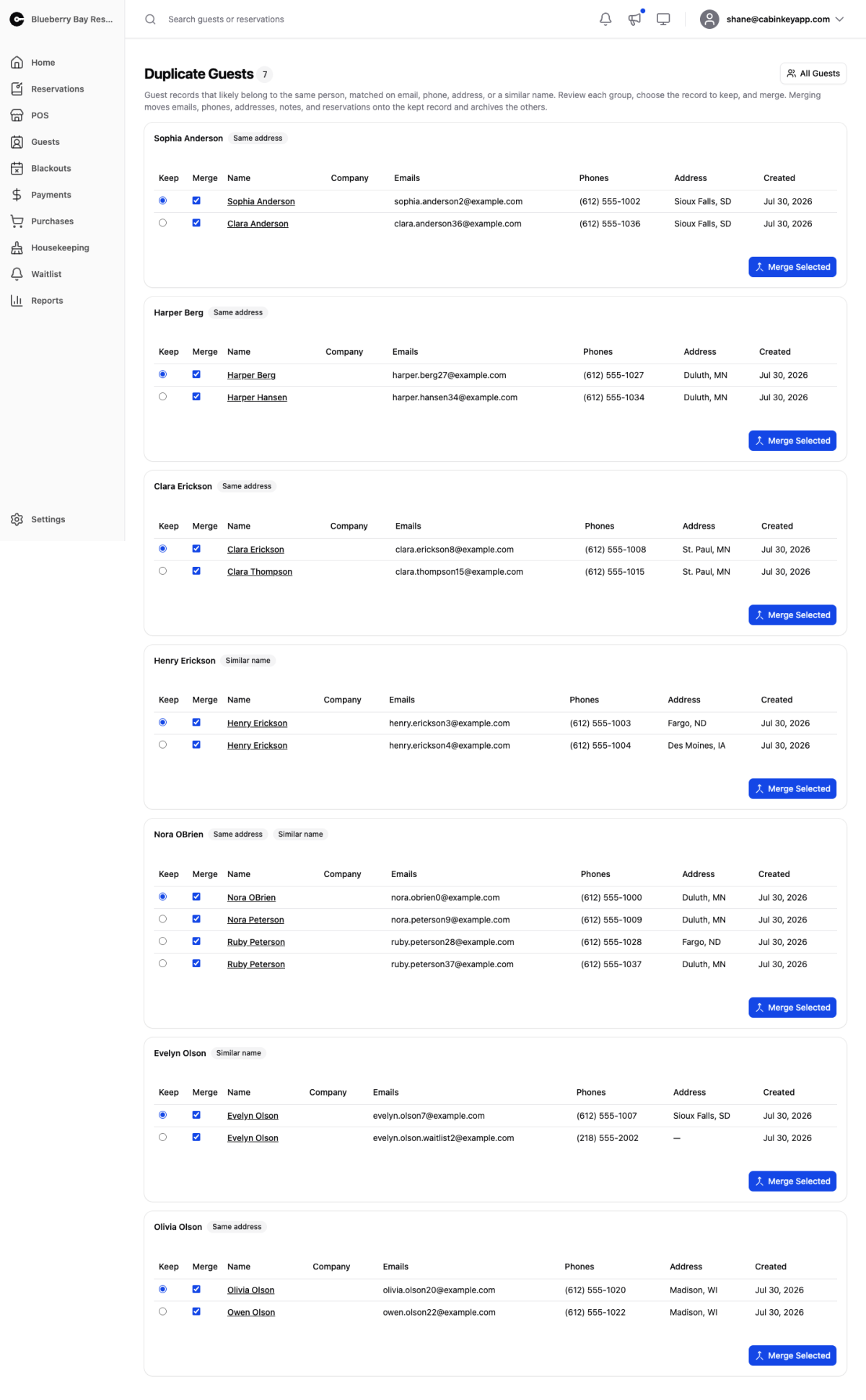 Click to enlarge
Guest lists accumulate duplicates. The same person books with a work email one year and a personal one the next, or a spouse books the second stay, or a name gets typed slightly differently over the phone. Each of those creates a separate record, which splits their history and makes your loyalty and return rate numbers understate how often people actually come back.
This page finds the likely duplicates and merges them. Records are matched on email, phone, address, or a similar name, and the badge beside each group tells you which of those triggered the match.
Matching is a suggestion, not a certainty. A shared household phone number or a father and son with the same name will land in the same group. Read each group before merging.
Reviewing a group
Each group is a table of the records CabinKey™ thinks are one person, showing name, company, emails, phones, address, and when each record was created. Guest names link to their detail page if you need the full history before deciding.
Two columns control the merge:
- Keep — the single record that survives. It defaults to the first one, but pick whichever is most complete or most current.
- Merge — which records get folded in. All are ticked by default; untick any that is not actually the same person.
Leaving a record unticked leaves it alone entirely, so a group of three where only two are really the same person is handled by unticking the third.
Merging
Merge Selected asks for confirmation, then moves the emails, phones, addresses, notes, and reservations from the merged records onto the record you kept, and archives the others.
Nothing is deleted. The archived records come off your active guest list but remain in the system, so a mistaken merge is recoverable.
New duplicates appear over time as guests book again with different details, so it is worth checking this page occasionally — before a season starts, or before you send a marketing email, so the same household does not get it twice.